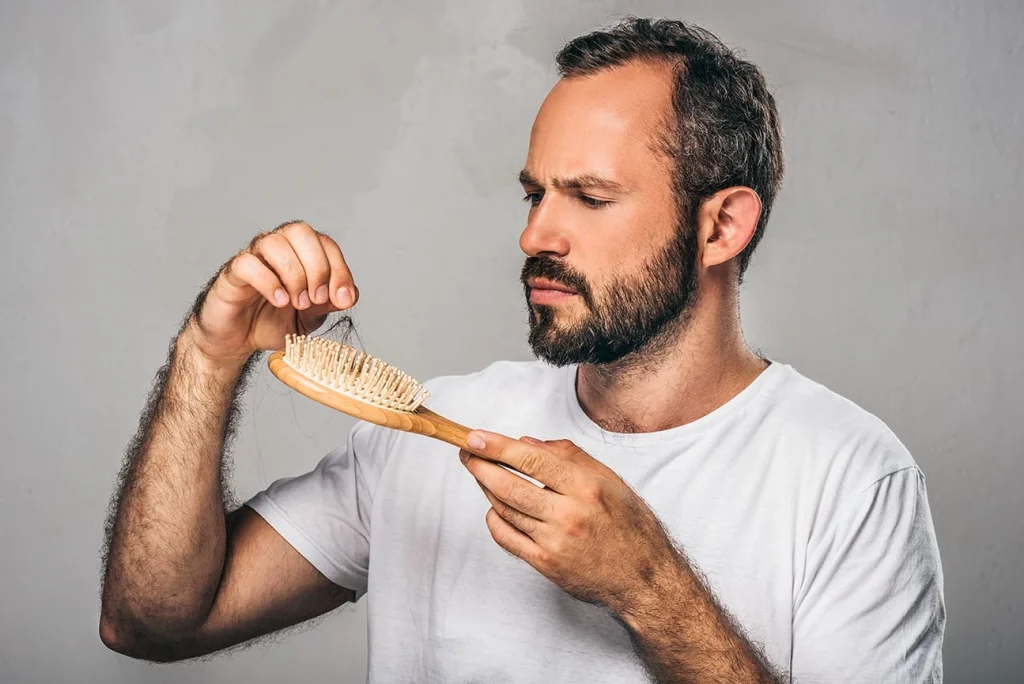
Hair fall, a common concern for both men and women, can be a distressing issue that impacts self-esteem and overall well-being. Understanding the symptoms and causes of hair fall is crucial for implementing effective preventive measures and seeking appropriate treatment options.
Symptoms:
- Increased Shedding: Experiencing more hair than usual in your hairbrush, on your pillow, or in the shower can be a noticeable symptom of hair fall. While some hair loss is normal, an excessive amount can be indicative of an underlying issue.
- Thinning Hair: Gradual thinning of the hair, especially on the top of the head or the crown, can be an early sign of hair fall. Over time, the scalp might become more visible due to the reduced density of hair.
- Receding Hairline: Men, in particular, might notice a receding hairline or the formation of a “M” shape at the front of the scalp, indicating hair loss.
- Bald Patches: Some individuals may experience the development of circular or irregular bald patches on the scalp, which can be a sign of a specific type of hair loss called alopecia areata.
Causes:
- Hormonal Changes: Fluctuations in hormones due to factors like pregnancy, childbirth, menopause, or thyroid disorders can contribute to hair fall.
- Genetic Predisposition: Androgenetic alopecia, commonly known as male or female pattern baldness, is primarily influenced by genetic factors and is one of the most common causes of hair fall.
- Stress: Physical or emotional stress can lead to temporary hair loss, known as telogen effluvium, where a significant number of hair follicles enter the resting phase, causing shedding a few months later.
- Poor Nutrition: Inadequate intake of essential nutrients, particularly iron, zinc, and vitamins, can contribute to hair fall and poor hair health.
- Medical Conditions: Certain medical conditions, such as alopecia areata, fungal infections of the scalp, and trichotillomania (hair-pulling disorder), can lead to significant hair loss if left untreated.
Seeking guidance from our healthcare professionals can help identify the underlying causes and determine the most suitable treatment options, such as medications, topical treatments. Early intervention and proper care can significantly improve hair fall symptoms.
